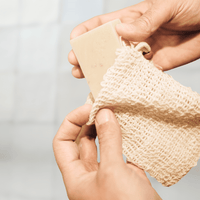

For most of us, hair care has always meant a plastic bottle. We’re used to the "pour and lather" ritual, but as we move toward more intentional, concentrated ways to care for ourselves, the shampoo bar has officially stepped into the mainstream.
Making the switch is about more than just ditching plastic; it’s about understanding how a solid concentrate treats your scalp and strands differently than a diluted liquid. In this guide, we’re breaking down the chemistry of shampoo bar vs. liquid shampoo, comparing how they stack up for different hair textures, and helping you decide which one earns a permanent spot in your shower.

The Great Shower Debate: Is it Time to Ditch the Bottle?
We’ve all been there—standing in the shower, staring at a shelf crowded with half-empty plastic bottles, wondering if there’s a simpler way to do hair care. For decades, the liquid pour was the only game in town. But lately, you’ve probably seen those solid little pucks popping up in your feed or a friend’s bathroom.
It’s natural to be skeptical. If you’ve spent years finding the perfect liquid formula for your curls or your fine highlights, "switching things up" feels like a risk. You might be wondering: Is this just a trend? Does it actually lather? And is bar shampoo better for my hair, or just better for my conscience? At The Earthling Co., we believe the best routine is the one that makes you feel good in your own skin (and hair). To help you decide, we’re stripping away the marketing fluff to look at the pros, the cons, and the actual science of the liquid versus solid debate.
Liquid Shampoo — The Familiar Standard
Liquid shampoo became the household standard for a reason: it’s easy. It’s what we know. But once you look past the convenience, there are a few things about the "bottle life" that might surprise you.
The Pros
-
Zero Learning Curve: You know the drill. Pour, lather, rinse. It’s consistent and requires no special storage beyond "keep the lid closed."
-
Instant Lather: Because liquid shampoo is already 80% to 90% water, it creates suds the second it hits your hair.
-
Mass Accessibility: You can grab a bottle at any drugstore or supermarket in a pinch.
The Cons
-
Paying for Water: When you buy liquid shampoo, you’re mostly paying for water. This makes the product heavier and bulkier to ship, which increases the carbon footprint before it even reaches your shower.
-
Preservative Heavy: Because water is a breeding ground for bacteria, liquid shampoos require significant preservatives (like parabens or methylisothiazolinone) to stay shelf-stable. For those with sensitive scalps, these can be a common source of irritation.
-
The Plastic Problem: Most liquid bottles are single-use plastic. Even with the best intentions, a staggering percentage of these bottles end up in landfills or the ocean rather than being recycled.
The Shampoo Bar — The Concentrated Alternative

If liquid shampoo is a diluted beverage, a shampoo bar is the espresso shot. It’s the same cleaning and conditioning agents, just without the "filler" water.
The Pros
-
Ingredient Density: One of the biggest solid shampoo benefits is that you’re getting the active ingredients—like Jojoba Oil, Cocoa Butter, and Vitamin B5—in their most potent form. Your hair gets more of what it needs and less of what it doesn't.
-
Travel Hero: No spills, no "3-ounce" TSA limits, and more room in your carry-on. It’s the ultimate "on-the-go" companion.
-
Gentle on the Planet: Our bars come in compostable packaging. By making the switch, the average person prevents about 15 plastic bottles a year from entering the waste stream.
-
Value for Money: Because you control the application (swiping rather than pouring), one bar can last as long as two or three 8oz bottles.
The Cons
-
The Learning Curve: It takes a few tries to find your "sweet spot" for how many swipes your hair needs.
-
Storage Matters: You can’t just leave a bar in the corner of the tub. If it doesn’t have a chance to dry out, it can get mushy, which wastes product.
Tailoring the Choice to Your Hair Type
In the battle of shampoo bar vs. liquid shampoo, your hair type plays the deciding role.
-
For Fine Hair: Liquid shampoos often rely on heavy silicones for "shine," which can weigh down fine strands. Shampoo bars provide a deeper, "weightless" clean that gives fine hair more natural volume.
-
For Thick/Curly Hair: Curls need moisture at the root. A bar allows you to apply the product directly to the scalp and under the heavy layers of your hair, ensuring you aren't missing the areas that need the most attention.
-
For Color-Treated Hair: Harsh sulfates in many liquid shampoos act like a "paint stripper" for your hair dye. Our bars are 100% sulfate-free, helping you keep that expensive salon color vibrant for longer.
Tips for a Seamless Transition
If you're ready to try a bar, follow these three steps to avoid the "first-time" frustrations:
-
Water is Key: Since there’s no water in the bar, your hair needs to be soaking wet. This is what activates the lather.
-
Swipe, Don't Scrub: 3-5 swipes from the front of your head to the back is usually plenty. Once you see the suds forming, put the bar down and use your hands to massage the lather in.
-
High and Dry: Invest in a Self-Draining Soap Dish. Allowing your bar to air-dry between uses is the difference between a bar that lasts one month and a bar that lasts three.
Switching to a bar isn't just a win for the planet—it's a targeted upgrade for your hair's health. By stripping away the water and the plastic, you're left with a potent, pH-balanced concentrate that works with your biology, not against it.
Whether you're a skeptic or a convert, here is everything you need to know about making the most of your solid routine:
Does it actually lather as well as liquid?
Surprisingly, yes. Because it's concentrated, the lather is often thicker and creamier than what you get from a bottle.
Will it make my hair greasy?
No. As long as you're using a pH-balanced syndet bar (like ours), it rinses away completely. If you feel greasy, you might just need to rinse for an extra 30 seconds to ensure the concentrated ingredients are fully washed out.
Is it safe for kids?
Absolutely. Many parents find the bars easier to use on wiggly kids because there’s no liquid to accidentally spill in their eyes!
The Verdict
So, is bar shampoo better? If you’re looking for a routine that prioritizes high-quality ingredients, reduces clutter, and supports a healthier planet without sacrificing your "good hair days," the answer is a resounding yes. Liquid shampoo is a fine choice for familiarity, but the shampoo bar is the choice for those ready to simplify and elevate their self-care.
Ultimately, your hair doesn't know if its nutrients came from a bottle or a bar—it only knows how it feels. And we think it’s going to feel pretty great.
Curious which bar is right for your texture?
Take our Hair Care Quiz to find your perfect match, or browse our Best-Selling Starter Bundles to make the switch today.