

Last updated: September 2026 · The Earthling Co.
We tend to think of pollution as something that happens outdoors—smog, car exhaust, and industrial smoke. However, indoor air can actually be two to five times more polluted than the air outside.
From synthetic carpets and conventional cleaning sprays to paint fumes and furniture adhesives, everyday household items off-gas volatile organic compounds (VOCs) like formaldehyde, benzene, and toluene into our living spaces.
The good news? Nature has provided a simple, beautiful, and completely zero-waste solution. Through a natural process known as phytoremediation, certain houseplants absorb airborne toxins through their leaves and root systems, turning harmful pollutants into plant food while releasing fresh oxygen back into your home.
The Green Air Principle: What goes into your home's air eventually goes into your lungs. Filtering indoor air with living plants creates a self-sustaining, non-toxic environment that breathes fresh life into your space without generating electronic or plastic waste.
Understanding how natural plant filtration compares to conventional appliances highlights why greening your space is a win for your home and the planet:
-
Resource & Energy Use: Electronic air purifiers require continuous electricity and rely on synthetic HEPA filters made of non-recyclable plastic fibers. Houseplants require zero electricity, relying solely on natural sunlight and water to purify your space for years.
-
Humidity & Air Comfort: Synthetic air filters can dry out indoor air, causing respiratory discomfort during colder months. Plants naturally transpire water vapor into the air, keeping indoor humidity at a comfortable, balanced level.
-
Aesthetic & Waste Footprint: Electronic units add bulky plastic clutter to your room and eventually become electronic waste (e-waste). Plants offer zero-waste, bio-centric beauty that enhances room aesthetics while reducing stress and boosting productivity.
10 Best Air-Purifying Houseplants for a Cleaner Home
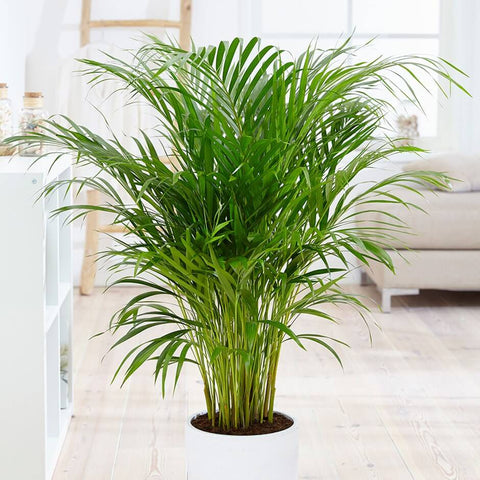
1. Bamboo palm (Chamaedorea seifrizii) (LOW MAINTENANCE)
source: crocus.co.uk

2. Chinese evergreen (Aglaonema modestum)
source: www.veldkampsflowers.com

3. English ivy (Hedera helix)
source: www.nurserylive.com

4. Gerbera daisy (Gerbera jamesonii)
source: www.cambridgeflorist.com

5. Janet Craig (Dracaena fragrans "Janet Craig") (LOW MAINTENANCE)
source: www.plantingman.com

6. Marginata (Dracaena marginata) (LOW MAINTENANCE)
source: www.plantz.com

7. Mass cane/corn plant (Dracaena fragrans "Massangeana") (LOW MAINTENANCE)
source: www.homedepot.com

8. Mother-in-law's tongue (Sansevieria trifasciata laurentii)
source: www.crocus.co.uk

9. Potted mum (Chrysanthemum morifolium) (LOW MAINTENANCE)
source: www.walmart.com

10. Peace lily (Spathiphyllum "Mauna Loa") (LOW MAINTENANCE)
source: www.ftd.com
Frequently Asked Questions
How many houseplants do I need to effectively purify my indoor air?
Based on NASA’s landmark Clean Air Study, aiming for 1 to 2 medium-sized plants per 100 square feet of living space provides noticeable air-purifying benefits across your home.
Which air-purifying plants are safe for cats and dogs?
If you have curious pets, opt for pet-safe varieties like the Spider Plant, Boston Fern, or Peperomia. Keep plants like the Peace Lily, Pothos, and Snake Plant on high shelves out of reach, as they can cause digestive irritation if ingested.
How do I care for my plants so they keep cleaning the air effectively?
Dust can accumulate on broad leaves, blocking stomata (pores) and reducing a plant's ability to absorb airborne toxins. Simply wipe down leaves periodically with a damp cloth to keep them breathing clearly and purifying efficiently!
Bringing air-purifying plants into your home is a simple, low-waste step toward a healthier living environment. Ready to sacrifice plastic, not performance? Shop Low-Waste Home Essentials today and build a non-toxic home you love!